Every November, more than 150,000 people fill the streets of Tucson's west side for one of the most powerful community events in the American Southwest. The All Souls Procession is not a festival you can simply drive to — it's a two-mile, human-powered procession through the Barrio Hollywood and Menlo Park neighborhoods, ending in a ceremonial urn-burning at the MSA Annex near Mercado San Agustín. Grande Avenue closes hours before the march begins.
The neighborhoods around the start point fill with parked cars that shouldn't be there. And when 150,000 people try to leave at the same time after the finale, the ride-share queue on Congress Street becomes its own kind of procession.
This guide is for the group organizer — the person coordinating a family reunion trip down from the Catalinas, a team outing from the office, a church group marching together, a friend group with costumes and paper flowers and a lot of feelings about the people they've lost. It covers what actually happens to roads and parking from 3 p.m. onward, where a Tucson charter bus can drop your group and where it can't, and why one bus for the whole crew beats any other plan once your headcount passes a dozen people.
Event
All Souls Procession Weekend — held annually in early November
Attendance
150,000+ participants and spectators
Procession start
Grande Avenue south of W. Speedway Blvd
Finale location
MSA Annex, 267 S. Avenida del Convento
Road closures begin
Approximately 3–4 p.m. on procession Sunday
Roads reopen
Approximately midnight
What Is the All Souls Procession?
The All Souls Procession began in 1990 when Tucson artist Susan Johnson — grieving her father's death — staged a small ceremonial walk through the west side of the city. A friend had told her about the Día de los Muertos rituals he'd witnessed in Guanajuato, Mexico, and Johnson wove that influence into something distinctly Tucson: public, improvisational, and open to whoever needed to carry something. By the second year, the community had already taken over.
Today it draws more than 150,000 people from across the region and around the country to one of the most emotionally resonant civic gatherings in the Southwest.
The procession is organized by the nonprofit Many Mouths One Stomach (MMOS) and draws on mourning rituals from many cultures — not only Mexican traditions, but Indigenous, European, and personal ones. Participants build altars, carry photographs and mementos of the deceased, wear elaborate costumes and face paint, and march two miles through the west side of Tucson. At the finale near the Mercado District, theatrical and musical performances build toward the climactic burning of the Urn — a massive steel vessel filled with tributes, prayers, and the names of people who have died.
When the Urn goes up, 150,000 people go quiet at once. It is the reason this procession has a 35-year hold on this city.
The 2025 event marked the 36th annual All Souls Procession. Every year it falls the first Sunday of November. We recommend checking the official All Souls Procession website for confirmed dates, times, and route information each year, as they are released by MMOS before the event.
The Route — and What It Means for Your Group's Transportation
Understanding the route is the first step in understanding the transportation problem. The procession begins on North Grande Avenue just south of West Speedway Boulevard and heads south through the Barrio Hollywood and Menlo Park neighborhoods. The march crosses St. Mary's Road, continues south along Bonita Avenue toward Congress Street, and ends at the MSA Annex, 267 S. Avenida del Convento, near the Mercado San Agustín in the Mercado District.
The entire distance is roughly two miles.
That geography creates two distinct transportation zones. The start area — Grande and Speedway — sits well west of downtown, in a residential neighborhood with limited off-street parking. Officials explicitly ask attendees not to park in Menlo Park or Barrio Hollywood, because the residents need their streets on the one night a year 150,000 people try to use them.
The finale area — around Avenida del Convento and Congress Street — sits at the western edge of downtown, reachable from the Congress Street parking garages but separated from them by the I-10 overpass and, for much of the evening, by closed streets.
Most groups do not need to be at the very start of the procession. They join somewhere along the route, watch from the Congress Street corridor, and position themselves for the finale. That makes downtown staging — where the parking garages are and where Sun Tran drops off — the logical base.
A Tucson charter bus picks up your group from wherever you're scattered across the city, drops you in the downtown corridor near the route, and waits nearby for the post-finale return. You skip the Barrio Hollywood parking mess entirely.
Road Closures: The Details That Matter
The City of Tucson closes a substantial section of the west side starting at approximately 3 to 4 p.m. on procession Sunday, and the closures do not reopen until around midnight. These are not temporary traffic pauses — they are full road closures that reroute vehicles away from the entire procession corridor for the better part of an evening.
The streets that close include:
- North Grande Avenue from West Speedway Boulevard south to West St. Mary's Road
- West St. Mary's Road from Grande east to the I-10 frontage road
- North Bonita Avenue from St. Mary's south to Congress Street
- West Congress Street from Grande Avenue east to the I-10 eastbound frontage road
- South Avenida del Convento between Congress Street and Cushing Street
- Short-term closures on eastbound and westbound I-10 frontage roads between St. Mary's Road and 22nd Street as the procession passes under the overpass
- The Congress Street I-10 off-ramps during the procession passage
What that means in practice: the entire northwestern approach to downtown from I-10 becomes extremely difficult to navigate from mid-afternoon onward. Vehicles attempting to reach the start area via Grande Avenue hit closed roads. The I-10 interchanges around Congress Street see heightened congestion as the closest alternative routes fill up.
Anyone trying to drive into or out of the Barrio Hollywood or Menlo Park neighborhoods by car after 4 p.m. is going to be stuck. The City of Tucson recommends checking their transportation page for current road closure details and encourages attendees to use transit options rather than driving — see the City of Tucson special event parking page for updates each year.
The practical upshot: if your group is in a private vehicle at 6 p.m. trying to get anywhere near Grande Avenue or the Congress Street corridor, you are in the closure zone or stuck behind it. A charter bus that waits away from the closed streets and picks up in an agreed downtown location is the cleanest solution — the route is handled for you, and nobody in your group is behind the wheel trying to navigate a closure map in the dark.
Parking: What's Available and What Fills Up
The City of Tucson and downtown stakeholders direct All Souls attendees toward downtown parking garages and lots as the designated staging area, with transit and Sun Tran buses handling the last mile to the procession corridor. Here is what exists and what fills when.
The primary downtown parking garages are:
- Centro Garage — 345 E. Congress St. (closest to the finale area)
- Depot Plaza Garage — 45 N. Fifth Ave.
- Library Garage — 45 W. Alameda St.
- City-State Garage — 498 W. Congress St.
The downtown surface lots include the Toole Lot (201 E. Toole Ave.), the Triangle Lot (225 E. Pennington St.), the Warehouse District Lot (180 E. Seventh St.), the Franklin Lot (50 W. Franklin St.), and Lots A, B, and C at the Tucson Convention Center.
Here's what the garages don't solve for your group: they are sized for cars, not coaches. A 40- or 56-passenger charter bus cannot enter a standard parking garage — the clearance heights are too low, and the turning radii are wrong. A charter bus needs street-level staging.
That means your group uses the downtown corridor as a meeting and dispersal point, and the bus waits nearby — on Congress Street, near the Convention Center, or in an agreed staging lane — rather than in a garage. This is standard for large event transportation across the country, and our team confirms the correct staging location for the specific event date when you book.
One note about timing: the downtown garages are walkable to the Congress Street and Avenida del Convento finale area, but they fill significantly on procession Sunday as both the 150,000 attendees and regular downtown visitors compete for the same spots. Groups that arrive by car before 4 p.m. generally find spaces; groups that drive in at 6 or 7 p.m. find full garages and loop through the same blocks repeatedly. A charter bus drops your group at the curb and skips that loop entirely.
Sun Tran and SunLink: The Official Transit Option
Sun Tran runs augmented bus service specifically for All Souls Procession Sunday, and it's worth understanding how it works — both because it's what's available for individuals and because it shows why a private charter bus works better for groups.
The transit setup: Sun Tran adds extra Route 22 runs on procession Sunday, with buses picking up at Ronstadt Transit Center (215 E. Congress St.) every 5 to 7 minutes from approximately 3:30 to 7 p.m. The buses drop riders near the procession's starting point at the Gateway at Grande, putting your group close to the start on Grande Avenue. The SunLink Streetcar runs free all day on procession Sunday and covers the central corridor from the University of Arizona to downtown.
For an individual or a couple, Sun Tran is an excellent option. For a group of 20, 30, or 50 people, it has real limitations. The frequency is good, but the capacity per bus is shared with everyone else trying to reach the same spot at the same time.
You cannot guarantee your entire group boards the same bus. You cannot load a cooler, costumes, altar supplies, or equipment. You have no flexibility to adjust pickup timing for the return trip based on when the finale actually ends.
And after the urn burns, every Sun Tran and SunLink vehicle running back toward downtown is packed. The walk from the finale at Avenida del Convento to any transit pickup point — after two miles of procession, standing for hours, and the emotional weight of the Urn burning — is not a short one for a large group.
A Tucson party bus rental solves each of those friction points. Your whole group moves together, you control the timing, and the bus is staged for the return trip as agreed rather than shared with the rest of the crowd. See the Sun Tran website and the SunLink Streetcar page for current service details on procession weekend.
Which Vehicle Fits Your Group?
The All Souls Procession draws every kind of group. A family with four generations carrying photos of the grandmother they lost last spring. A university department marching together for the first time after a colleague's death.
A friend group in full Catrina face paint that spent three weekends building their altar piece. The vehicle that fits depends on headcount, what you're bringing, and how far you're coming from.
| Vehicle | Typical capacity | Best for | Key features |
|---|---|---|---|
| Sprinter van / 14-passenger Sprinter limo | Up to ~14 | Small families, tight friend groups | Premium leather, USB charging, tinted windows |
| 15–35 passenger minibus | ~15–35 | Mid-size family groups, office teams | Powerful A/C, plush reclining seats, overhead storage |
| Party bus (15–50 passengers) | ~15–50 | Friend groups, community organizations wanting a celebration atmosphere | Color-changing LED lighting, Bluetooth sound, flat-panel TVs, onboard bar area |
| 40–56 passenger charter bus | Up to 56 | Large family reunions, church groups, employer outings | Reclining seats, climate control, WiFi, power outlets, onboard restroom, undercarriage luggage bays |
A few practical notes for All Souls groups specifically. If your group is carrying significant items — a large altar piece, multiple costumes on hangers, flowers, candles, framed photographs, drums or musical instruments — the undercarriage bays on a full-size charter bus are the right choice. Those bays handle what a minibus roof won't.
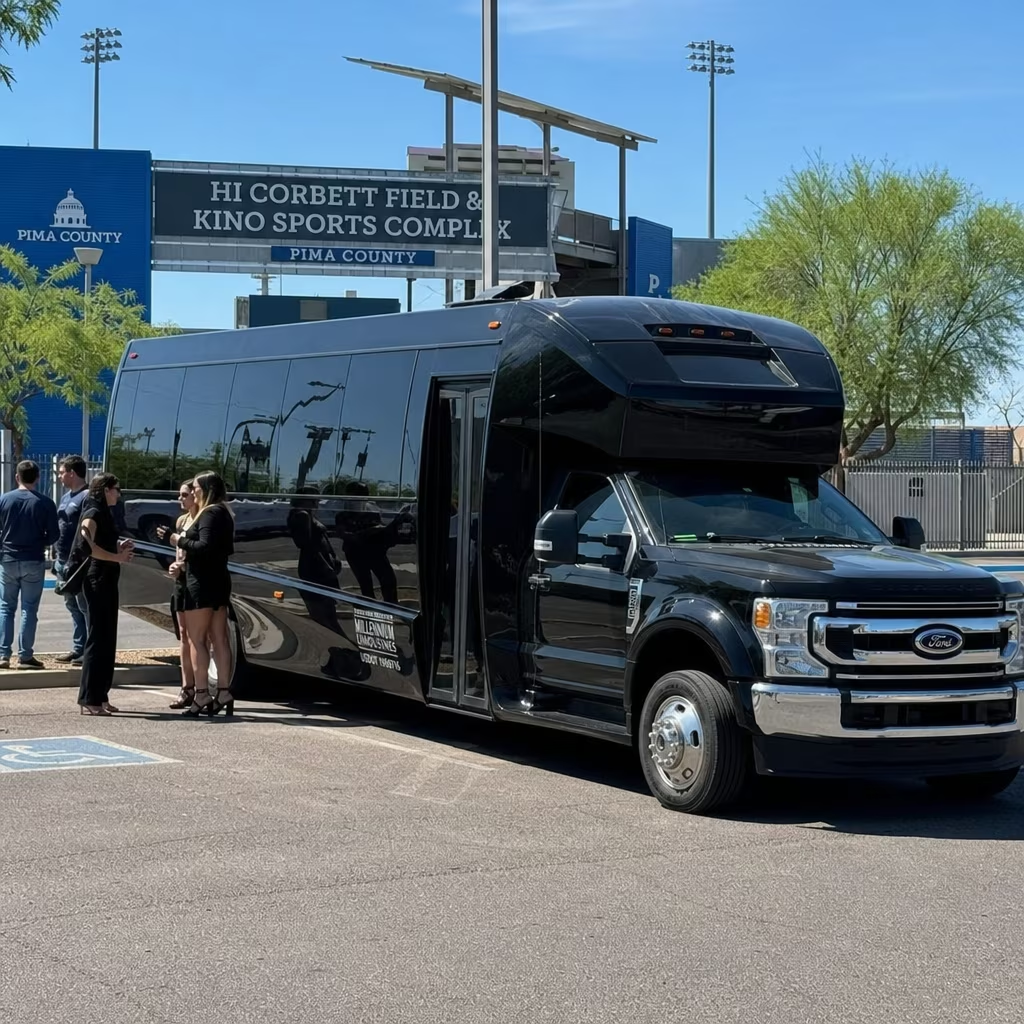
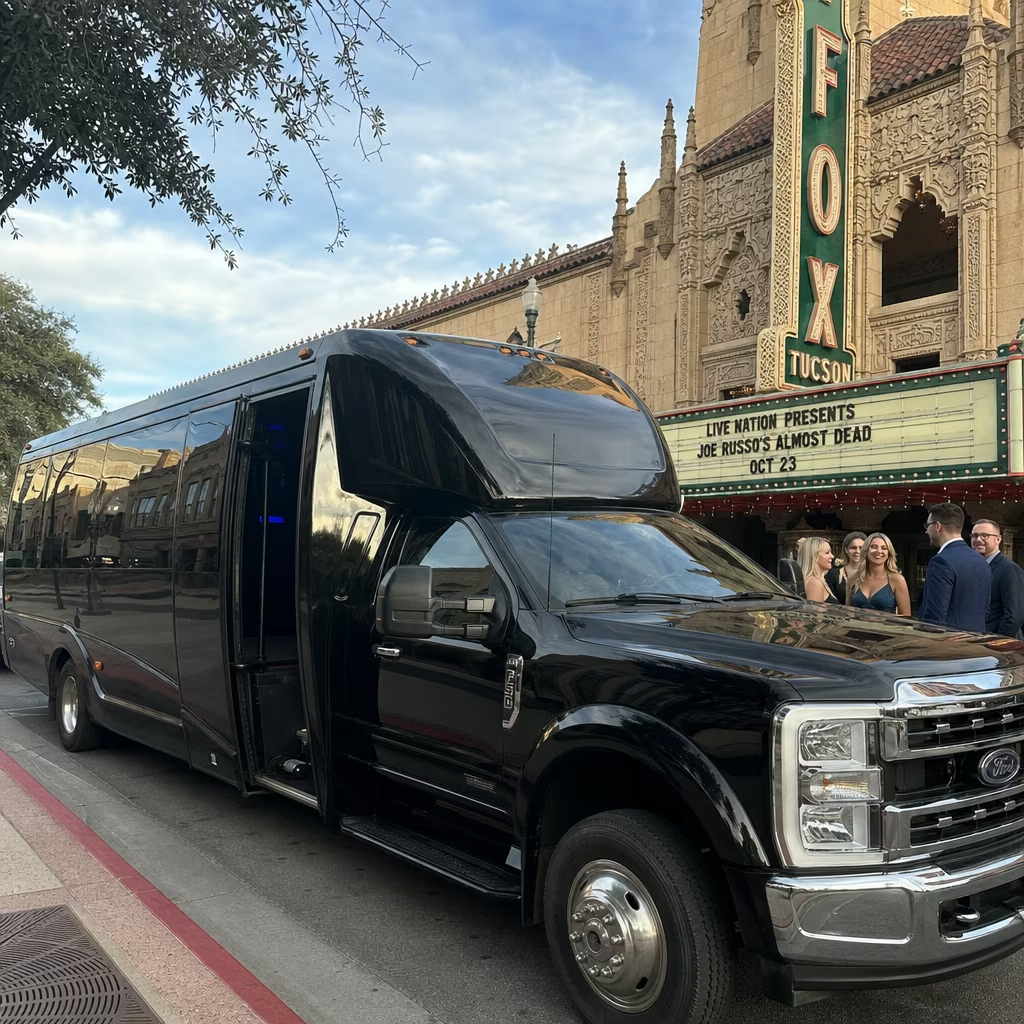
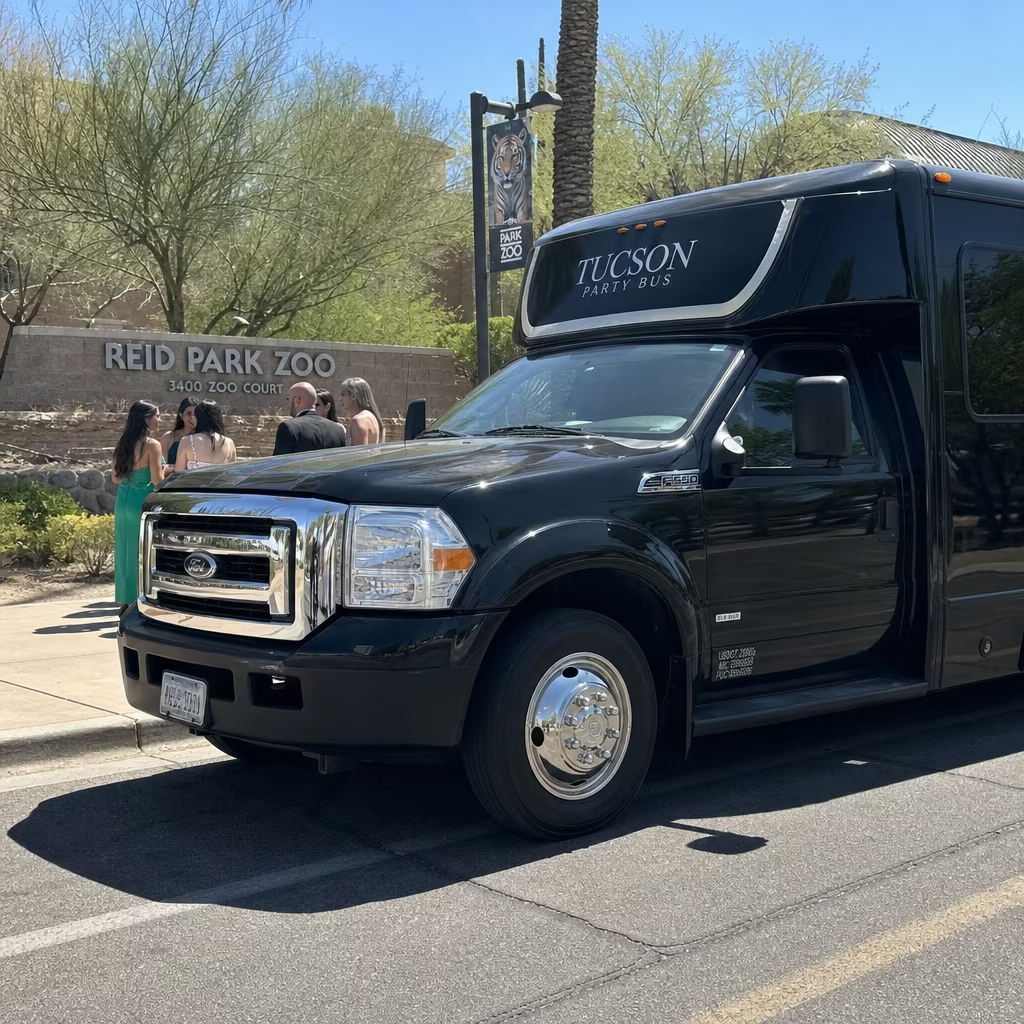
If your group leans celebratory and wants the ride to downtown to feel like part of the evening, a Tucson party bus rental with LED lighting and a sound system turns the drive into something. If you've got a mixed group of 20 that just needs comfortable, air-conditioned transit across town, a minibus is clean and practical. We never match you to a vehicle bigger than you need — you only pay for the seats your group actually fills.
ADA-accessible vehicles are available with advance notice. Let us know your requirements when you request a quote and the right vehicle will be ready.
Where the Bus Drops Off and Picks Up
This is the practical detail most event pages skip. Here's how it actually works for a charter bus serving the All Souls Procession.
The procession route and the road closures mean a bus cannot drive into Barrio Hollywood or Menlo Park after closures begin. It also cannot stage on the closed sections of Congress Street or Grande Avenue. What it can do is drop your group on the open sections of the Congress Street corridor — east of the closure boundary — within walking distance of the route and the finale area.
Common drop-off points include the Tucson Convention Center area on Granada Avenue, the curb near the Depot Plaza Garage on Fifth Avenue, or Congress Street east of Church Avenue where the street remains open during closures. Your group walks the remaining short distance to the procession, joining at whatever point along the route makes sense for your timing.
For the return pickup: the finale at the MSA Annex, 267 S. Avenida del Convento, ends when the Urn burns. That moment is not clockwork — it happens when it happens. The smartest approach is to agree on a specific post-finale meeting point and pickup window with our team before the evening starts, so the bus is in the right spot the moment your group is ready to leave.
The rideshare pickup stations the City designates are at Grande & Congress (near Chaleteria) and at Cushing & Grande (adjacent to Caterpillar) — those areas get extremely congested as 150,000 people simultaneously want to leave. A private bus waiting nearby on an agreed approach road skips that queue.
Because road closures, staging zones, and the specific finale departure points can shift year to year based on the City's event plan, we confirm your group's exact drop-off and pickup locations when you book — using the current year's closures, not a generic map from a prior year. Call 520-917-1795 to walk through your specific itinerary.
All Souls Weekend: The Full Schedule
The Sunday procession is the centerpiece, but All Souls Weekend extends across several days. Many groups build a fuller Tucson itinerary around the main event, and a charter bus is the easiest way to move the group between all of it.
The weekend typically includes:
- The Shrine Building Workshop — held at the MSA Annex in the days before the procession. Participants build personal altars and memorial pieces that will be carried in the march or placed in the Urn. A charter bus drops your group here without parking hassle.
- Marigold Parade and related Saturday events in the downtown and Barrio Hollywood area — the smaller march that precedes Sunday's main event
- Day of the Dead events throughout the city — the Tucson Botanical Garden, the Arizona History Museum, and various Barrio District cultural organizations host Día de los Muertos programming across the weekend
- The Grand Finale and Urn Burning on Sunday evening at the MSA Annex near Mercado San Agustín (267 S. Avenida del Convento)
Groups coming from out of town who want to attend multiple events across the weekend find a Tucson bus rental far simpler than renting multiple cars, coordinating carpools, and solving parking at every stop. One bus, one coordinator, one itinerary. Check the official All Souls Procession site for the full weekend schedule each year — MMOS releases programming details as the event approaches.
Group Trip Types We Handle for All Souls
Different reasons to be there, same logistical problem to solve. A few of the most common groups we move for the All Souls Procession:
- Extended family groups. Multiple households, multiple generations, gathering to honor someone who died in the past year. A 30-passenger minibus picks everyone up from homes across Tucson's east side or foothills and delivers the whole family to the downtown corridor together. Nobody is late because they couldn't find parking, and nobody has to be the designated driver after an emotionally exhausting night.
- Employer and organizational groups. Companies, nonprofits, and institutions that encourage employees or members to participate together. A single bus keeps the group intact and signals that this is a collective experience, not a solo commute.
- Church and community groups. Faith communities that honor the dead as a collective act and want to march as a unit. A full-size charter bus handles a congregation of 40 to 56 with undercarriage space for altar pieces and supplies.
- Friend groups and found-family crews. The assembled adults who met at a yoga studio, a neighborhood block party, or an artist collective and want to go in costume, bring flowers, and be together for the finale. A Tucson party bus with LED lighting and sound keeps the spirit of the evening alive from the driveway to the procession.
- Out-of-town visitors. People who fly into Tucson International Airport specifically for All Souls — a direct airport-to-hotel-to-procession bus rental simplifies the entire trip and keeps a visiting group of 15 or 20 from splitting up the moment they leave baggage claim.
How Much Does an All Souls Bus Rental Cost?
Party Buses Tucson offers all-inclusive pricing online in under 30 seconds — you will know the exact price before you ever book. The quote is shaped by a handful of clear factors.
- Vehicle size — a 14-passenger Sprinter limo and a 56-passenger charter bus are different rates
- Total hours — how long the vehicle is dedicated to your group, from pickup through the post-finale return
- Pickup and drop-off locations — a Catalina Foothills pickup involves more mileage than a downtown hotel
- Date demand — All Souls Sunday is one of Tucson's highest-demand event dates of the year
For real ranges to anchor your planning: 14-passenger Sprinter limos run $170–$344/hour; 15–20 passenger party buses run $204–$378/hour; 20–30 passenger party buses run $244–$414/hour; 35–50 passenger party buses and minibuses run $294–$490/hour; and 40–56 passenger charter buses run $150–$300/hour or $1,200–$2,500/day. Pricing depends on mileage, time of year, and vehicle type, but you will never be surprised by hidden costs.
The per-person math for a large group almost always favors the bus. A family of 20 splitting the cost of a 4-hour minibus rental pays a fraction of what 5 separate carpool cars would spend on parking, gas, and rideshare surge pricing on the way home — and nobody in the family is sober-driving at the end of a night that requires everyone to be present. Call 520-917-1795 for an all-inclusive quote, or use our online tool for instant availability.
Book Early: All Souls Sunday Fills the Fleet
The All Souls Procession is the single largest annual event in Tucson, and it falls on a Sunday in early November. That combination — the city's biggest crowd, a weekend date, and November's shoulder-season pricing windows — means the right-size vehicles go fast once the date is announced.
In practical terms: the first Sunday of November is one of the two or three dates on the Tucson charter bus calendar that genuinely sells out. Party buses and minibuses in the 20- to 40-passenger range are the first to go, because most All Souls groups fall in that size range. Groups that wait until October to book frequently find their preferred vehicle unavailable and are offered either a vehicle that's too large (and more expensive) or nothing at all.
Our strong recommendation: as soon as the procession date is confirmed for the year — typically announced by MMOS in late summer or early September — call us at 520-917-1795 and lock in your vehicle. Booking 6 to 8 weeks ahead is workable. Booking 4 months ahead is better.
Booking a week before is a gamble that usually doesn't pay off for a 150,000-person event.
A Sample All Souls Group Evening
To put the logistics in concrete terms: last November, a 28-person family group — four generations gathering to carry a photograph of a grandmother who died in early 2025 — booked a 35-passenger minibus for the evening. Pickup was at 4:00 PM from a home in the Sam Hughes neighborhood, near the University of Arizona. The bus ran west on Speedway to the downtown corridor, dropping the group on Fifth Avenue near Depot Plaza at 4:30 PM, before the Congress Street closure boundary.
The family walked five blocks to join the procession on Grande Avenue and marched the full two miles south to the MSA Annex. After the Urn burned and the family had time to stand in the silence that follows, they made their way back to an agreed pickup point on Congress east of Church at 9:45 PM. The minibus was staged three blocks away.
The 6-hour rental came to $1,760 total — about $63 per person for a family that would otherwise have needed five or six separate cars, half a dozen parking passes, and one unfortunate volunteer to stay sober for the return drive.
Coming From Outside Tucson?
The All Souls Procession draws visitors from Phoenix, Flagstaff, Sierra Vista, Nogales, and as far as California and Texas. Groups flying into Tucson International Airport (TUS) for the weekend can connect a single charter bus trip from the airport directly to their hotel, and then run the same bus for the procession evening and any other weekend events. A 56-passenger charter bus handles the full group from TUS baggage claim to the hotel on Speedway or Congress Street, then repositions for the Sunday evening route — no car rental coordination, no airport shuttle fragmentation, no one getting separated on Campbell Avenue in an unfamiliar city.
Groups driving in from the Phoenix metro area on I-10 typically arrive on Saturday or Sunday morning to avoid the Sunday afternoon closure buildup. The I-10 interchange at Congress Street and the westbound ramps near St. Mary's Road are part of the closed area on Sunday evening, so groups that try to drive in from Phoenix on Sunday night for the procession find themselves stuck at the same interchanges the City closes around the event. An organized bus departure from the Phoenix area in the early afternoon, reaching downtown Tucson before 3 p.m., skips that problem.
Group Tips for the All Souls Procession
A few things worth knowing before your group arrives, drawn from the official All Souls Procession guidelines:
- Bring what you want to carry into the Urn. Participants are encouraged to write names, prayers, and remembrances on slips of paper and place them inside the Urn before the finale begins. Have your group bring something to contribute — it's the point of the whole evening.
- Arrive early if you want to march from the start. The procession begins at Grande south of Speedway, and early arrivals get the full two-mile experience. Groups joining later along the route miss the energy of the march itself.
- Wear comfortable shoes. The two-mile route on pavement, plus standing time at the finale, means footwear matters. This comes up every year for groups in costume.
- Plan for the finale timing. The Urn burning is the culmination, but it doesn't happen on a strict schedule. Plan your bus pickup window to allow flexibility after the Urn burns — most groups want time to stand in the aftermath before heading back.
- Water and lighting. The procession runs from dusk into full dark. Candles and paper lanterns are part of the tradition. Bring water — early November in Tucson is still warm, and the desert night gets cooler fast.
- Rideshare apps are unreliable at finale exit. With 150,000 people leaving the same two-block radius at roughly the same time after the Urn burns, surge pricing spikes and wait times extend significantly. Groups that depend on rideshare for the return trip at 10 p.m. routinely wait 30 to 45 minutes and pay multiples of the standard fare. A pre-arranged private bus pickup beats the post-finale rideshare queue by a wide margin.
Frequently Asked Questions
When is the All Souls Procession in Tucson?
The All Souls Procession is held annually on the first Sunday of November. The 2025 event was the 36th annual procession. Check the official All Souls Procession website each year for the confirmed date, as MMOS typically announces it in late summer.
Where does the All Souls Procession start and end?
The procession starts on North Grande Avenue just south of West Speedway Boulevard, in the Barrio Hollywood and Menlo Park area of Tucson's west side. It ends at the MSA Annex, 267 S. Avenida del Convento, near the Mercado San Agustín, where the Grand Finale and Urn burning take place. The full route is approximately two miles.
Where can a charter bus drop off for the All Souls Procession?
Road closures beginning around 3 to 4 p.m. prevent vehicles from accessing the Grande Avenue start area or the closed sections of Congress Street. Charter buses drop groups on the open sections of the Congress Street corridor east of the closure boundary — near the Tucson Convention Center on Granada Avenue, on Fifth Avenue near Depot Plaza, or on Congress Street east of Church Avenue. Your group walks from the drop-off point to the procession route.
We confirm your specific drop-off and pickup locations based on the current year's closures when you book.
What roads close for the All Souls Procession?
Closures typically begin around 3 to 4 p.m. and last until approximately midnight. Affected roads include North Grande Avenue from Speedway south to St. Mary's Road, West St. Mary's Road from Grande to the I-10 frontage road, North Bonita Avenue from St. Mary's to Congress Street, West Congress Street from Grande to the I-10 eastbound frontage road, and South Avenida del Convento between Congress and Cushing. The Congress Street I-10 off-ramps also close temporarily during the procession's I-10 crossing.
Check the City of Tucson special event parking page for the current year's closure details.
How far in advance should I book a bus for the All Souls Procession?
Book as early as the date is confirmed — ideally 6 to 8 weeks out at minimum, and 3 to 4 months ahead if possible. All Souls Sunday is one of the highest-demand dates on the Tucson charter bus calendar, and the 20- to 40-passenger vehicles that most groups need are the first to sell out. Waiting until mid-October typically means reduced availability and higher rates.
Call 520-917-1795 as soon as you have a confirmed headcount.
Can a party bus go to the All Souls Procession?
Yes. A Tucson party bus rental works well for All Souls groups that want the drive to feel festive — LED lighting, a sound system, and an onboard bar area turn the ride into part of the evening. The same road closure constraints apply to party buses as to any other large vehicle, so drop-off follows the same downtown corridor approach.
Call 520-917-1795 for availability on your specific date.
Is there parking near the All Souls Procession?
Downtown parking garages (Centro, Depot Plaza, Library, and City-State) and surface lots near the Tucson Convention Center serve as the main attendee parking areas. The City asks attendees not to park in the Barrio Hollywood or Menlo Park neighborhoods. Downtown garages fill significantly by mid-evening on procession Sunday.
A charter bus drops your group in the downtown corridor and cuts out the parking search entirely.
Does Sun Tran run extra service for the All Souls Procession?
Yes. Sun Tran adds extra Route 22 buses on procession Sunday, departing from the Ronstadt Transit Center (215 E. Congress St.) every 5 to 7 minutes from approximately 3:30 to 7 p.m. The SunLink Streetcar also runs free all day.
These options work well for individuals; for groups of 15 or more, a private charter bus gives you dedicated capacity, schedule flexibility, and a coordinated return pickup that shared transit cannot match.
What is the Urn at the All Souls Procession?
The Urn is a large sculptural steel vessel carried at the front of the procession. Participants place written tributes, photographs, prayers, and mementos of deceased loved ones inside it throughout the evening. At the Grand Finale near the MSA Annex, the Urn is hoisted and ceremonially burned, releasing everything inside.
It is the emotional center of the entire event.
Book Your All Souls Procession Bus Today
The All Souls Procession is one night a year, and it's too meaningful to spend it circling for parking on Grande Avenue or waiting 45 minutes for a post-finale rideshare. One Tucson charter bus or party bus rental handles the whole group — from pickup at your home, hotel, or meeting point across the city, through the downtown drop-off and the post-finale return — for one flat, predictable rate split among everyone who's going.
All Souls Sunday fills our fleet fast. Give us a call at 520-917-1795 as soon as you have a headcount and a date — we'll confirm availability, walk through the drop-off and pickup logistics for your group, and get you an all-inclusive quote in under 30 seconds. The bus takes care of the logistics.
The night is for your group.